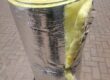
Rockwool Insulation Blanket Overview
Rockwool Insulation Blanket is a high-performance thermal insulation material designed for industrial heat control, fire protection, and acoustic performance. Made from mineral wool fibers, this insulation solution offers excellent resistance to extreme temperatures while maintaining structural stability in demanding environments. Industries rely on it for energy efficiency, equipment protection, and workplace safety.
Rockwool insulation blankets are flexible rolls that are easy to install on ducts, boilers, tanks, ovens, and industrial machinery. Their dense fiber composition helps reduce heat loss while maintaining consistent thermal protection.


Rockwool Insulation Blanket Sizes & Specifications
Kenworks stocks Rockwool Insulation Blanket rolls with the following dimensions:
6m x 1m x 50mm
3m x 1m x 75mm
3m x 1m x 100mm
Technical Specifications
Density: 100kg/m³
Maximum Temperature Resistance: 1000°C
Material Type: Mineral Wool Thermal Insulation Roll
Application: Industrial & Building Thermal Protection
Key Benefits of Rockwool Insulation Blanket
1. Powerful Thermal Performance
Rockwool Insulation Blanket reduces heat transfer effectively, improving energy efficiency and reducing operational costs.
2. Excellent Fire Resistance
Designed to withstand temperatures up to 1000°C, it is ideal for high-temperature industrial environments.
3. Strong Acoustic Insulation
The fibrous structure absorbs sound vibrations, making it useful for machinery and plant rooms.
4. Durable Industrial Protection
Rockwool Insulation Blanket maintains performance even under harsh operating conditions.
5. Moisture Resistance
It helps resist water absorption and reduces the risk of insulation failure.
6. Easy Installation
Flexible roll design simplifies application on curved and flat surfaces.
7. Long Service Life
Industrial facilities benefit from reduced maintenance and long-term insulation stability.
Industrial Applications
Rockwool Insulation Blanket is widely used across multiple sectors including:
Boilers and furnaces
HVAC ducting systems
Industrial ovens and kilns
Petrochemical plants
Power generation facilities
Storage tanks and pipelines
Manufacturing plants
For general insulation standards, you can reference external technical guidance from
https://www.iso.org (DoFollow external reference)
and energy efficiency resources from
https://www.energy.gov (DoFollow external reference).
Thermal Performance & Temperature Resistance
Rockwool Insulation Blanket performs exceptionally well in high-temperature environments where traditional insulation materials may fail. The mineral fiber structure resists heat penetration while maintaining mechanical strength, making it suitable for continuous exposure to elevated temperatures.
Why Rockwool is a Reliable Industrial Solution
Rockwool Insulation Blanket is trusted in industrial facilities because it combines fire resistance, acoustic insulation, and energy efficiency in one material. Its flexibility allows installation on complex surfaces, while its durability ensures consistent performance over time. Internal links should connect this post to:
Rockwool insulation page
High temperature insulation page
Industrial insulation materials page
Frequent Asked Questions
1. What is Rockwool Insulation Blanket and how does it work in industrial thermal insulation?
Rockwool Insulation Blanket is a mineral wool thermal insulation material made from melted volcanic rock fibers spun into flexible rolls. Its dense fibrous structure traps air pockets, reducing heat transfer and improving energy efficiency in industrial equipment. It is commonly used to insulate boilers, furnaces, ducts, storage tanks, and ovens where consistent high-temperature resistance and thermal stability are required.
2. What temperature can Rockwool Insulation Blanket withstand and is it suitable for high heat environments?
Rockwool Insulation Blanket can withstand temperatures up to approximately 1000°C, making it highly suitable for demanding industrial environments. It maintains structural integrity even under continuous heat exposure, which is why it is widely used in power plants, petrochemical facilities, manufacturing plants, and industrial processing systems where extreme heat resistance is essential.
3. What Rockwool Insulation Blanket sizes and specifications are available at Kenworks?
Kenworks stocks Rockwool Insulation Blanket rolls in the following industrial dimensions:
6m x 1m x 50mm
3m x 1m x 75mm
3m x 1m x 100mm
These blankets typically have a density of 100kg/m³ and are designed to deliver reliable thermal insulation performance in high-temperature industrial installations.
4. Where is Rockwool Insulation Blanket commonly used in industrial and commercial projects?
Rockwool Insulation Blanket is widely used in boilers, furnaces, kilns, HVAC duct systems, industrial ovens, pipelines, tanks, and power generation facilities. It is also used in building construction for fire protection and acoustic insulation. Its flexibility makes it suitable for both flat and curved surfaces, allowing it to adapt easily to complex industrial equipment shapes.
5. What are the main benefits of using Rockwool Insulation Blanket compared to other insulation materials?
Rockwool Insulation Blanket offers several advantages including excellent fire resistance, strong acoustic performance, durability in harsh environments, moisture resistance, and long service life. Unlike some lightweight insulation materials, mineral wool maintains its insulation properties even at very high temperatures, making it more reliable for industrial heat management.
6. How is Rockwool Insulation Blanket installed and what should be considered during installation?
Rockwool Insulation Blanket is typically wrapped around ducts, pipes, or equipment and secured using wire mesh, metal bands, or insulation pins. During installation, it is important to ensure proper thickness selection based on operating temperature and to use protective outer cladding when exposed to weather or mechanical impact. Correct installation helps maximise thermal efficiency, improve safety, and extend insulation lifespan.